What Is Diastasis Recti?
Diastasis recti is a separation of the two long muscles that run down the front of the abdomen, the rectus abdominis. They are normally joined at the midline by a band of connective tissue called the linea alba. When that band stretches and thins, usually during pregnancy, the muscles drift apart and the abdominal wall loses its firm inner support. The result is a belly that bulges or domes forward no matter how much weight you lose or how many crunches you do. It is not fat and it is not loose skin, though both often come with it; it is a gap in the muscle wall.
Board-certified plastic surgeon Dr. Moises Salama repairs diastasis recti as part of a tummy tuck at Elite Plastic Surgery in Hollywood, serving Miami. His tummy tuck does three things in one surgery: repairs the separated muscles, removes the excess skin, and enhances the waist with liposuction of the flanks. He has performed more than 4,000 tummy tucks. This page explains how to tell whether you have a diastasis, when exercise helps and when it cannot, and how surgical repair works.
Diastasis recti repair at a glance
- What it is
- Separation of the rectus muscles along the midline; stretched linea alba
- Most common cause
- Pregnancy; also weight changes, heavy straining, aging
- Self-check
- A gap of 2 finger-widths or more at the midline when you lift your head lying down
- Repair
- Plication: muscles sutured back together from ribs to pubic bone, during a tummy tuck
- Also treated
- Excess skin, umbilical hernia if present, waist shaping with flank liposuction
- Recovery
- Desk work ~2 weeks; exercise ~6 weeks; final result 3–6 months
- Permanence
- Permanent unless stretched again by pregnancy or large weight gain
- Surgeon
- Dr. Moises Salama, 4,000+ tummy tucks
What Causes Diastasis Recti?
The linea alba is strong but not elastic. Anything that stretches the abdominal wall for months can leave it permanently widened:
- Pregnancy. The growing uterus pushes the muscles apart. Most women have some separation at delivery; in many it never fully closes, and it is more likely after twins, large babies, several pregnancies, or pregnancies close together.
- Weight gain and loss. Years of abdominal weight stretch the midline in men and women alike.
- Repeated straining. Heavy lifting with the abdomen pushed out, chronic coughing or constipation.
- Aging and genetics. Connective tissue weakens with age, and some people are born with a thinner linea alba.
Medical illustrations, simplified and not to scale.
Signs and Symptoms
- A belly that protrudes or looks “still pregnant” months or years after childbirth, even at a healthy weight.
- A ridge or dome that rises along the midline when you sit up, cough or lift.
- A soft gap you can press your fingers into above or below the navel.
- A belly button that has turned outward, or a bulge at the navel (a possible umbilical hernia).
- Weak core, lower back pain, swayed posture, bloating or constipation from reduced abdominal support.
- Loose or stretched skin over the area, often with stretch marks.
How to Check for Diastasis Recti at Home
- Lie on your back with your knees bent and feet flat.
- Place the fingers of one hand on the midline just above your belly button, pointing toward your feet.
- Lift your head and shoulders slightly, as if starting a crunch, and feel for the inner edges of the two muscles.
- Note how many fingers fit in the gap and how deep it feels. Repeat above and below the navel.
A gap of two finger-widths (about 2 cm) or more, or a gap that is deep and soft, is a diastasis. The width tells you how far apart the muscles are; the depth and length tell you how much the linea alba has thinned. Dr. Salama measures both at your consultation, sometimes with ultrasound, and checks for a hernia.
Can Exercise Fix Diastasis Recti?
Sometimes, for small gaps. In the first year after delivery, core physical therapy that trains the deep transverse abdominis and avoids pushing the belly outward can narrow a separation of under about 2 cm. What exercise cannot do is shorten tissue that has permanently stretched. If the gap is wider than 2–3 cm, runs the length of the abdomen, is still there a year or more after your last pregnancy, or came with loose skin, it will not close with exercise. Crunches and sit-ups, which push the abdominal contents against the weak midline, usually make the dome more visible.
| Core physical therapy | Surgical repair (plication) | |
|---|---|---|
| Best for | Gaps under ~2 cm, within a year of delivery, no loose skin | Gaps of 2 cm or more, long-standing separations, loose skin, hernia |
| What it does | Strengthens the deep core so the muscles support the midline better | Brings the muscles back together permanently with sutures |
| Closes the gap? | Narrows it; cannot shorten stretched tissue | Yes, full length |
| Treats loose skin? | No | Yes, when done as a tummy tuck |
| Downtime | None | 2–4 weeks light activity; exercise at 6 weeks |
How Diastasis Recti Surgery Works
The repair is called a plication. Through the low tummy tuck incision, Dr. Salama lifts the skin and fat off the muscle wall, exposing the full length of the separation. He then sutures the inner edges of the two rectus muscles together, from the ribs down to the pubic bone, with permanent sutures, usually in two layers. This rebuilds a firm inner wall, flattens the dome and narrows the waist from the inside. Because the stretched skin and fat have to be lifted anyway, they are removed in the same operation and the belly button is brought out through a new opening. Liposuction of the flanks finishes the waistline.
- Anesthesia. General anesthesia by a board-certified anesthesia provider in the practice’s state-certified surgical facility.
- Incision. A low horizontal incision just above the pubic area; in a mini tummy tuck with plication the incision is shorter.
- Exposing the muscles. The skin and fat are lifted off the abdominal wall up to the ribs, and any umbilical hernia is repaired.
- Plication. The separated muscles are sutured together along the midline with permanent sutures, tightening the whole abdominal wall.
- Waist enhancement. Liposuction of the flanks and, where needed, the upper abdomen refines the contour.
- Skin removal and closing. Excess skin is removed, the belly button is repositioned, the incision is closed in layers, small drains are placed and a compression garment is applied.
Video: Tummy tuck with muscle tightening. Contains surgical footage.
Which Operation Repairs Your Diastasis?
| Full tummy tuck with plication | Mini tummy tuck with plication | Extended tummy tuck | |
|---|---|---|---|
| Muscle repair | Full length, ribs to pubic bone | Lower abdomen, sometimes full length | Full length |
| Skin removed | Whole abdomen | Below the belly button only | Abdomen plus flanks and hips |
| Belly button | Repositioned | Usually unchanged | Repositioned |
| Best for | Separation after pregnancy with loose skin above and below the navel | Separation with a small lower pouch and firm upper abdomen | Separation after major weight loss with skin wrapping to the back |
Most patients who ask about a mini tummy tuck turn out to need a full one, because the separation and loose skin continue above the belly button. Dr. Salama recommends the operation at your consultation. See the tummy tuck page for the full comparison.
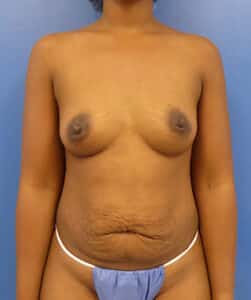
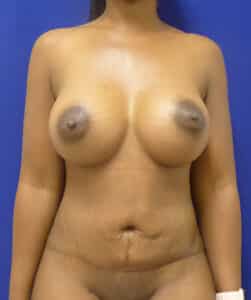
Diastasis Recti Repair Before and After
These patients had a full tummy tuck with muscle repair and flank liposuction. The flat profile comes from the repaired muscle wall; the skin removal and liposuction define it.


Recovery After Diastasis Recti Repair
The muscle repair is what you feel most in the first two weeks: the abdomen is tight, and standing fully upright takes a few days. It is also what protects the result, so the lifting rules matter.
| Time after surgery | What to expect |
|---|---|
| Days 1–7 | Walk slightly bent at the hips, sleep with your upper body raised and knees bent, no lifting over 5 lb. Compression garment on; drains in place. |
| Weeks 2–3 | Drains out at a follow-up visit. Desk work resumes. Standing straighter each day. |
| Weeks 4–6 | Light activity and longer walks. No core exercise, running or lifting until Dr. Salama clears you at about six weeks. |
| Months 2–3 | Gentle core training restarts: deep breathing, pelvic tilts, then progressive work. No crunches until cleared. |
| Months 3–6 | Swelling settles; the final flat profile and waist appear. |
Full details, including drains, garments, sleeping and scar care, are in the tummy tuck recovery guide.
Video: a tummy tuck patient describes her experience.
Risks and How They’re Managed
The risks are those of a tummy tuck: bleeding or a blood collection, fluid collection (seroma), infection, slow healing at the incision, numbness of the lower abdomen, scarring, blood clots and anesthesia risks. Specific to the repair are temporary tightness and, rarely, loosening of the plication if the abdomen is strained early. At Elite they are reduced by reviewing your health history before surgery, board-certified anesthesia in a state-certified facility, permanent two-layer sutures, drains and compression, early walking to lower clot risk, clear lifting limits for six weeks and close follow-up.
How Much Does Diastasis Recti Surgery Cost in Miami?
Because the repair is performed as part of a tummy tuck, the cost is the tummy tuck price. A full tummy tuck in Miami typically costs between $8,000 and $15,000 in total. A mini tummy tuck, which treats only the lower abdomen, usually costs less. Nationally, the surgeon’s fee alone averages $8,000 to $13,500, according to the American Society of Plastic Surgeons.
What your quote includes
Your written quote from Elite Plastic Surgery lists the surgeon’s fee, the anesthesia fee and your post-operative care, including follow-up visits while your incision heals. Financing through CareCredit, United Medical Credit and Alphaeon Credit is available; see financing.
Is diastasis recti repair covered by insurance?
Usually not. Most insurers class the repair as cosmetic even when it causes back pain. A hernia repair, or removal of a hanging skin apron that causes medical problems, may be covered in part. Learn more about insurance-covered tummy tuck options.
Why Patients Choose Dr. Salama
Patient reviews: 4.9★ on Google, 748 reviews for Elite Plastic Surgery · 4.7★ on RealSelf, 2,561 reviews (RealSelf Verified) · counts as of October 2026.
- Certified by the American Board of Plastic Surgery and the American Board of Surgery; member of the American Society of Plastic Surgeons and The Aesthetic Society.
- Every tummy tuck repairs the muscles, removes the excess skin and shapes the waist; the three are planned together, not as add-ons.
- He performs every surgery himself, in the practice’s own state-certified facility in Hollywood, Florida, minutes from Miami.
- Bilingual team: hablamos español.
Find Out Whether Your Diastasis Needs Repair
Start with a virtual consultation: send a few photos from home and Dr. Salama reviews them himself. Or call or text (305) 933-4033. Hablamos español.
Diastasis Recti Frequently Asked Questions
What is diastasis recti?
Diastasis recti is a separation of the two vertical “six-pack” muscles (the rectus abdominis) along the midline of the abdomen. The connective tissue between them, the linea alba, stretches and thins, so the muscles drift apart and the belly bulges forward even at a healthy weight. It is most common after pregnancy but also occurs in men and after large weight changes.
How do I check myself for diastasis recti?
Lie on your back with knees bent, lift your head slightly as if starting a crunch, and press your fingers into the midline above and below the belly button. If you feel a soft gap two finger-widths or wider, or see a ridge or dome rising along the midline, you likely have diastasis recti. A surgeon confirms the width and length by examination or ultrasound.
Can diastasis recti be fixed with exercise?
Mild separations, under about 2 cm, often improve with core physical therapy in the first year after pregnancy. Wider gaps, gaps that run the full length of the abdomen, or those that persist beyond a year usually do not close, because the stretched tissue between the muscles cannot shorten itself. Crunches can make the bulge worse. Surgery is the only way to bring the muscles back together permanently.
What surgery repairs diastasis recti?
The repair is called plication: the surgeon sews the two muscles back together along the midline with permanent sutures, from the ribs to the pubic bone. At Elite Plastic Surgery it is performed as part of a tummy tuck, which also removes the loose skin and fat that almost always accompany the separation, and usually includes liposuction of the flanks to shape the waist.
Is diastasis recti surgery the same as a tummy tuck?
A tummy tuck is the operation; diastasis repair is one of its steps. A full tummy tuck does three things: muscle repair (the plication), removal of excess skin and fat, and waist enhancement with liposuction of the flanks. Patients with a separation but little loose skin may be candidates for a mini tummy tuck with plication, which uses a shorter incision.
Can diastasis recti be repaired without a tummy tuck?
Some surgeons offer endoscopic or laparoscopic plication for patients with no loose skin. In practice, almost everyone with a diastasis wide enough to need surgery also has stretched skin, and tightening the muscles under loose skin leaves the skin even looser. Dr. Salama evaluates your skin and muscles together and recommends the approach that corrects both.
Does repairing diastasis recti help back pain and posture?
Often, yes. The rectus muscles stabilize the spine. When they are separated, the lower back and hip muscles compensate, which is a common cause of lower back pain and a swayed posture after pregnancy. Patients frequently report better core strength and less back strain after repair, though surgery is not performed primarily to treat pain.
What about an umbilical hernia?
A hernia at the belly button often accompanies diastasis recti, because the same stretched tissue lets abdominal contents push through. Dr. Salama checks for a hernia before surgery and repairs one found during the tummy tuck in the same operation.
How long is recovery after diastasis recti repair?
The repair makes the first two weeks the tightest part of a tummy tuck recovery: you walk slightly bent at the hips, sleep with your upper body raised, and avoid lifting. Most patients return to desk work in about two weeks, light activity in 2–4 weeks and exercise around six weeks. Core training resumes gradually after that.
Is the repair permanent?
Yes, as long as the muscles are not stretched again. The permanent sutures hold the muscles together while scar tissue reinforces the repair. A later pregnancy or large weight gain can stretch the repair, which is why most women wait until they have finished having children.
Can I get pregnant after diastasis recti repair?
It is safe, but pregnancy can separate the repaired muscles and stretch the skin again, so most women wait until they are done having children. Dr. Salama advises waiting 6 to 9 months after delivery and breastfeeding before a tummy tuck.
Does insurance cover diastasis recti surgery?
Usually not; most insurers class diastasis repair as cosmetic even when it causes back pain. A hernia repair or removal of a hanging skin apron that causes medical problems may be covered in part. See our page on insurance-covered tummy tuck options.
How much does diastasis recti surgery cost in Miami?
Because the repair is done as part of a tummy tuck, the cost is the tummy tuck price: in Miami a full tummy tuck typically costs between $8,000 and $15,000 in total, and a mini tummy tuck usually costs less. Your written quote from Elite Plastic Surgery lists the surgeon’s fee, the anesthesia fee and your post-operative care. Financing is available.
Do men get diastasis recti?
Yes. In men it usually follows large weight gain and loss, heavy lifting with poor technique, or aging, and it produces the same forward bulge. The repair is the same, and the tummy tuck for men is tailored to a flatter, more defined midsection.
Can diastasis recti come back after surgery?
Rarely, if the repair is protected during healing and the abdomen is not stretched again by pregnancy or major weight gain. Following the lifting restrictions in the first six weeks matters most.
Sources
- American Society of Plastic Surgeons, Tummy tuck.
- Sperstad JB et al. Diastasis recti abdominis during pregnancy and 12 months after childbirth: prevalence, risk factors and report of lumbopelvic pain. Br J Sports Med 2016.
- Elite Plastic Surgery tummy tuck gallery.