

Tummy Tuck Recovery: What Dr. Salama’s Patients Experience
A tummy tuck is the most involved of the common body procedures, because it does three things at once: repairs the separated abdominal muscles, removes the excess skin and fat, and, with liposuction of the flanks, shapes the waist. Each of those has its own healing timeline, and knowing them in advance is what makes the recovery manageable. This is the plan board-certified plastic surgeon Dr. Moises Salama gives his tummy tuck patients at Elite Plastic Surgery in Hollywood, serving Miami, week by week, from the first night to the final result.
Tummy tuck recovery at a glance
- Go home
- Same day (or after one night, for combined procedures), with a caregiver for 3–5 days
- Drains
- 1–2, out at about 5–10 days
- Binder
- Day and night for about 6 weeks
- Posture
- Slightly bent at the hips for 1–2 weeks; beach-chair sleeping
- Driving
- 10–14 days, once off prescription medication
- Desk work
- About 2 weeks (mini tummy tuck: about 1 week)
- Exercise
- Light cardio 4 weeks; full clearance 6–8 weeks; core last
- Final result
- Swelling clears over 3–6 months; scar fades over 12–18 months
The First Few Days
Surgery takes about two to three hours under general anesthesia in the practice’s state-certified surgical facility. You wake in an abdominal binder with one or two thin drains exiting below the incision, and you go home the same day with an adult who stays with you. Standing fully upright is not possible for the first days, because the skin was closed under tension and the muscles were stitched along the midline, so you walk and rest with your hips slightly flexed. The abdomen feels tight and heavy rather than sharply painful, and the tightness eases day by day.
- Pain control. Take the prescribed pain medication and muscle relaxant on schedule for the first two to three days instead of waiting for pain to build; fill the prescriptions before surgery. Most patients are on over-the-counter medication by day five to seven.
- Walk. Short, slow walks around the house every two hours while awake, from the first evening. Walking is the single most effective way to lower the risk of blood clots and to move swelling.
- Rest in the beach-chair position: upper body raised, knees bent, in a recliner or on wedge pillows.
- Drains. Empty the bulbs two or three times a day, record the amount and keep them pinned to the binder or a lanyard.
- Eat light, high-protein meals, drink water, and start a stool softener; pain medication and reduced movement cause constipation, and straining is uncomfortable after a muscle repair.
- Shower at 48 hours with the drains in place, pat the incision dry and put the binder straight back on.
Medical illustrations, simplified and not to scale.
Video: our patient coordinator’s after-care tips.
Tummy Tuck Recovery Week by Week
| Time after surgery | How you feel | What you can do | What to avoid |
|---|---|---|---|
| Days 1–3 | Tight, swollen, sore; walking bent; drains in | Walk every 2 hours; shower at 48 hours; rest reclined | Standing fully upright, lifting, lying flat |
| Days 4–7 | Tightness easing; off prescription medication for most by day 5–7 | Longer walks; straightening up a little each day; drains out when output falls | Lifting over 10 lb, bending at the waist, driving on narcotics |
| Week 2 | Nearly upright; incision sealed; swelling and firmness in the lower abdomen | Drive once off narcotics; desk work from about day 14; light household tasks | Exercise, baths and pools, alcohol |
| Weeks 3–4 | Comfortable walking and standing; numbness and tingling of the lower abdomen; scar red and raised | Scar care begins (silicone tape or gel); light cardio at 4 weeks; most daily activities | Core exercise, running, lifting over 20 lb |
| Week 6 | Swelling noticeably down; binder can come off during the day | Cleared for exercise and lifting (6–8 weeks); side and stomach sleeping; swimming | Jumping straight into heavy core work |
| Weeks 8–12 | Feel normal; contour emerging; end-of-day swelling | Full exercise; core training reintroduced gradually | Sun on the scar |
| Months 3–6 | Swelling clears; final contour | Bra, swimsuit and clothes shopping for the new shape | Tanning the scar for the first year |
| Months 6–18 | Scar fades to a thin pale line; sensation returns | Annual check-in |
Video: our massage therapist on post-surgery massage.
Pain, Tightness and the Bent-Over Walk
What most patients notice is not pain but tightness: the feeling of having done far too many sit-ups, concentrated along the midline where the separated muscles were repaired. It peaks on day two or three and eases quickly after that. The repair and the skin closure are why Dr. Salama asks you to walk and rest with your hips slightly flexed for the first one to two weeks: standing fully upright pulls on the incision and the sutures. You straighten up a little each day and are usually upright by the end of week two. Moving from lying to sitting is easiest by rolling onto your side first and pushing up with your arms. A muscle relaxant helps the tightness; ice is not used over the lower abdomen because the skin there is numb and can be injured without you feeling it.
Drains, the Binder and Incision Care
- Drains. One or two thin tubes leave the skin below the incision and end in soft bulbs. They prevent fluid from collecting under the lifted skin (a seroma). You empty them two or three times a day, note the amount and color, and strip the tubing as shown. They are removed at the office once the output drops below the target, usually between day five and day ten; removal takes seconds. Afterward, the practice’s protocol is simple: apply antibacterial ointment to the drain site for three days only, wash the area with soap and water in the shower and let it dry, and when the small scab falls off, any clear suture end that appears is snipped close to the skin. The practice’s video on this page walks through all of it.
- The binder. Worn day and night for about six weeks, removed only to shower. It limits swelling, supports the repair and helps the skin adhere smoothly to the new contour. If it rolls or feels loose as swelling falls, it needs adjusting or a smaller size; it must stay snug without pinching.
- The incision. Closed in layers with dissolving sutures and covered with tape or a dressing. Keep it dry apart from the shower, pat rather than rub, and leave the tape until it lifts on its own or Dr. Salama removes it. The belly button incision is cleaned with a cotton swab and kept dry. Small areas of delayed healing at the ends of the incision or at the belly button are not unusual and heal with simple dressing care.
Video: Dr. Salama explains surgical drains and their removal.
Sleeping, Sitting and Getting Around
- Sleep in the beach-chair position for about two weeks: head and shoulders raised on a wedge or in a recliner, a pillow under the knees. Then flat on your back with a knee pillow; side sleeping at three to four weeks; stomach sleeping after six weeks.
- Sitting is fine from day one in a supported chair; avoid low, soft seats you have to pull yourself out of. Stand and walk every hour.
- Stairs are fine slowly, with the rail.
- Driving at 10–14 days, once you are off prescription pain medication and can turn and brake without pain. A small pillow between the belt and your abdomen protects the incision.
- Clothing: loose, soft, high-waisted bottoms and front-opening tops over the binder for the first weeks; nothing with a waistband that sits on the incision.
Swelling, Numbness and the Final Shape
The lower abdomen stays swollen and firm for six to eight weeks and keeps improving over three to six months. The reason is anatomical: lifting the skin divides the small lymph channels that drain fluid from the lower abdomen, and they take months to re-form, so fluid pools above the scar, worse by evening and after salty food. Walking, the binder, a low-salt high-protein diet and, when Dr. Salama recommends it, lymphatic drainage massage all speed it along. The skin between the belly button and the scar is numb for the same reason, divided sensory nerves, and tingles as feeling returns over 6–18 months. Judge the result at three months, not three weeks, and expect small end-of-day swelling for up to six months.
Video: Firmness and scar tissue after liposuction and tummy tuck.
Activity, Lifting, Work and Exercise
| Activity | Full tummy tuck | Mini tummy tuck |
|---|---|---|
| Walking | Day of surgery, short and frequent | Day of surgery |
| Driving | 10–14 days | About 1 week |
| Desk or remote work | About 2 weeks | About 1 week |
| Lifting up to 10 lb | From day 1; nothing heavier for 2 weeks | From day 1 |
| Lifting up to 20 lb (a toddler) | Weeks 3–6 | Weeks 2–4 |
| Light cardio (stationary bike, incline walk) | 4 weeks | 3 weeks |
| Running, lifting, full workouts | 6–8 weeks, when cleared | 4–6 weeks |
| Core training | 8 weeks, gradually | 6 weeks |
| Swimming | 4–6 weeks, incision sealed | 4 weeks |
| Sexual activity | About 3 weeks, no pressure on the abdomen | About 2 weeks |
| Physical or lifting jobs | 4–6 weeks | 3–4 weeks |
| Flying home (out-of-town patients) | After the drains are out and the first follow-ups, about 10–14 days | About 1 week |
The six-week lifting limit protects the muscle repair: the sutures hold the muscles together while scar tissue forms between them, and heavy lifting or sit-ups before that can loosen the repair or cause bleeding. When exercise resumes, start at half your usual intensity and add core work last.
Diet, Alcohol, Smoking and Supplements
- Protein, fiber and water. Protein for healing, fiber and a stool softener to avoid straining, water to move swelling. Keep salt low for the first weeks.
- No alcohol while taking prescription medication, and ideally for two weeks; it increases swelling and bleeding risk.
- No smoking, vaping or nicotine for at least four weeks before and four weeks after surgery. The tummy tuck flap depends on a limited blood supply; nicotine narrows those vessels and is the leading cause of wound-healing problems after this operation.
- Supplements to stop for two weeks: fish oil, vitamin E, ginkgo, garlic, ginseng, turmeric, aspirin, ibuprofen and naproxen, unless Dr. Salama says otherwise.
- Weight. Stay at a stable weight; the result lasts as long as your weight does.
The Tummy Tuck Scar
Dr. Salama places the scar low across the abdomen, within the line of underwear and most swimsuits, and keeps it as short as the amount of skin to remove allows; a mini tummy tuck leaves a shorter scar, and a fleur-de-lis tummy tuck after major weight loss adds a vertical component. The belly button is brought out through a small, hidden incision. The scar is red and raised for the first three months, pink and flattening by six months, and a thin pale line by 12–18 months. For the best fade: silicone gel or tape daily from about week three for three to six months, no sun on the scar for a year (sunscreen or clothing over it at the beach), no smoking, and keep your weight stable. If a section stays wide or raised, a scar revision is possible once it has matured. Dr. Salama’s posts on incision care and minimizing scars go into more detail.
Video: Dr. Salama on whether a tummy tuck scar can be fixed with a revision.
Normal vs. Call the Office
| Normal in the first weeks | Call us the same day |
|---|---|
| Tightness, pulling along the incision, walking bent | Sudden, severe pain or rapidly increasing swelling, especially on one side (possible bleeding) |
| Pink or straw-colored drain fluid that lessens each day | Drain fluid that turns bright red, or output that stops abruptly while the abdomen swells |
| Bruising that drifts toward the groin and thighs | Fever over 101°F or chills |
| Numbness and tingling of the lower abdomen | Spreading redness, warmth, pus, a foul smell or an incision that opens |
| Small areas of slow healing at the ends of the incision or the belly button | A soft, sloshing swelling of the lower abdomen after the drains are out (possible seroma; easily treated if seen early) |
| Tiredness, low mood and constipation in week one | Calf pain, swelling of one leg, chest pain or shortness of breath |
Dr. Salama sees every tummy tuck patient himself at the follow-up visits over the first weeks and months, and the after-hours number is on your discharge sheet.
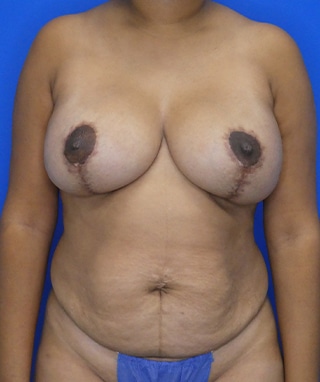
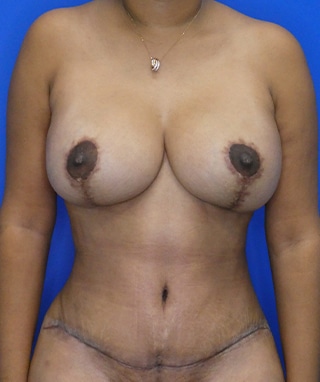
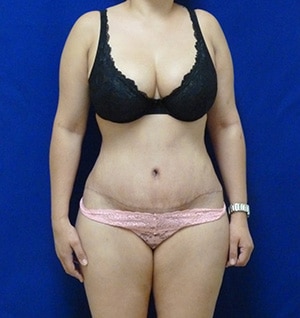
What the Result Looks Like Once Healed
These patients from Dr. Salama’s gallery were photographed after their swelling had cleared.



Recovery When a Tummy Tuck Is Combined With Other Procedures
- With liposuction of the flanks and back (most of Dr. Salama’s tummy tucks): more bruising and firmness at the sides; the binder covers both areas; lymphatic massage of the lipo zones once the incision is sealed.
- With breast surgery (mommy makeover): the abdomen sets the pace; add the breast rules (no reaching overhead, supportive bra). Plan two to three weeks before desk work.
- With a BBL: you can neither sit on the buttocks nor lie flat, so recovery is spent reclined on your side or in the beach-chair position with a BBL pillow; see the BBL recovery guide. Dr. Salama discusses combining versus staging at your consultation.
- With J-Plasma/Renuvion on the upper abdomen or flanks: extra firmness in the treated skin for the first weeks; same binder schedule.
Why Patients Recover With Dr. Salama
Patient reviews: 4.9★ on Google, 748 reviews for Elite Plastic Surgery · 4.7★ on RealSelf, 2,561 reviews (RealSelf Verified) · counts as of October 2026.
- Certified by the American Board of Plastic Surgery and the American Board of Surgery; member of the American Society of Plastic Surgeons and The Aesthetic Society.
- Surgery in the practice’s own state-certified facility in Hollywood, Florida, minutes from Miami, with board-certified anesthesia providers.
- Every patient leaves with written instructions, the binder, a drain log and a direct line to the team.
- Bilingual team: hablamos español.
Planning a Tummy Tuck? Start With a Consultation
Book a virtual consultation from home, or call or text (305) 933-4033. Hablamos español.
Tummy Tuck Recovery Frequently Asked Questions
How long is tummy tuck recovery?
Plan on two weeks before desk work, four weeks before most daily activities feel normal, six to eight weeks before exercise and lifting, and three to six months for the swelling to clear and the final contour to appear. A mini tummy tuck is faster: about one week before desk work and four to six weeks before exercise.
How painful is a tummy tuck?
The first three to five days are the hardest, mainly from the muscle repair: the abdomen feels tight and getting up from a chair or bed takes effort. Prescription pain medication and a muscle relaxant cover the first week; most patients switch to over-the-counter medication by day five to seven. Walking slightly bent at the hips takes the strain off the repair.
Why do I have to walk hunched over after a tummy tuck?
The skin was pulled down and closed under tension, and the muscles were stitched together along the midline. Standing fully upright in the first week pulls on both. Walking and resting with the hips slightly flexed keeps the incision and the repair relaxed; you straighten up gradually over the second week.
How do I sleep after a tummy tuck?
In a beach-chair position: upper body raised on a wedge or recliner, knees bent over a pillow, for about two weeks. Then on your back with a pillow under the knees. Side sleeping is usually comfortable at three to four weeks and stomach sleeping after six weeks.
How long do tummy tuck drains stay in?
Usually five to ten days. Dr. Salama places one or two thin drains under the skin to carry away fluid that would otherwise collect as a seroma. You empty and record the output two or three times a day; the drains come out at the office once the output falls below the target amount, which is quick and only mildly uncomfortable.
How long do you wear the binder after a tummy tuck?
The abdominal binder or compression garment is worn day and night for about six weeks, removed only to shower. It limits swelling, supports the repair and helps the skin settle onto the new contour. Many patients keep wearing it by day for a few more weeks because it feels supportive.
When can I shower after a tummy tuck?
Usually 48 hours after surgery, with the drains in place (pinned to a lanyard or a drain belt). Let water run over the incision, pat it dry and reapply the dressing or tape as instructed. No baths, pools, hot tubs or the ocean until the incision is fully sealed, about four to six weeks.
When can I drive after a tummy tuck?
Once you are off prescription pain medication and can sit upright, turn and brake without pain, usually at 10–14 days. Place a small pillow between the seat belt and your abdomen for the first weeks.
When can I go back to work after a tummy tuck?
Desk and remote work at about two weeks; some patients work part-time from home from day 7–10. Jobs that involve lifting, bending or standing all day wait four to six weeks. A mini tummy tuck allows desk work at about one week.
When can I exercise after a tummy tuck?
Walking starts the day of surgery and is the only exercise for the first four weeks. Light cardio such as a stationary bike or incline walking begins at four weeks; running, lifting and core training wait until Dr. Salama clears you at six to eight weeks, then build gradually. Core work is reintroduced last and lightly.
When can I lift my child after a tummy tuck?
Nothing over 10 pounds for the first two weeks and nothing over 20 pounds until week six. Have your child climb onto your lap, use a stroller, and get help with car seats and bath time. Lifting too early strains the muscle repair and can cause bleeding.
How long does swelling last after a tummy tuck?
The lower abdomen stays swollen and firm for six to eight weeks and improves steadily over three to six months, often worse at the end of the day and after salty meals. The incision cut the lymph channels that drain the lower abdomen, and they take months to re-form. The binder, walking, a low-salt diet and lymphatic massage all help.
Why is my stomach numb after a tummy tuck?
The skin between the belly button and the incision is numb because the small nerves that cross the area were divided when the skin was lifted. Sensation returns gradually over 6–18 months, often with tingling or itching along the way, and a small strip above the scar can stay less sensitive permanently.
Will my tummy tuck scar fade?
Yes. The scar runs low across the abdomen, placed by Dr. Salama so it sits below the line of underwear and a bikini. It is red and raised for the first three months, pink and flattening by six months, and a thin pale line by 12–18 months. Silicone tape or gel from week three, no sun on the scar for a year and no smoking give the best fade.
What are the warning signs after a tummy tuck?
Call the office the same day for fever over 101°F, spreading redness or discharge at the incision, a sudden increase in swelling or pain on one side, drain output that turns bright red or stops suddenly, calf pain or swelling of one leg, chest pain or shortness of breath. The after-hours number is on your discharge instructions.
Can I get pregnant after a tummy tuck?
Yes. Pregnancy after a tummy tuck is safe for you and the baby, but it can stretch the repaired muscles and the skin again, so Dr. Salama recommends having a tummy tuck once you are finished having children. If you do become pregnant, the result can be revised afterward.
How much does a tummy tuck cost in Miami?
A tummy tuck in Miami typically costs between $8,000 and $15,000 in total, depending on whether muscle repair, liposuction of the flanks or a combined procedure is included. Your written quote from Elite Plastic Surgery lists the surgeon’s fee, anesthesia, the facility, the garment and post-operative care; see the tummy tuck page for what changes the price.
Sources
- American Society of Plastic Surgeons, Tummy tuck recovery.
- The Aesthetic Society, Tummy tuck (abdominoplasty).
- Elite Plastic Surgery pre- and post-operative instructions for abdominoplasty (Dr. Moises Salama).

