

Is a BBL Safe? The Honest Answer
The Brazilian butt lift earned a reputation as the most dangerous cosmetic operation, and the reputation was deserved for the way it used to be done. It is also a reputation that the specialty has worked hard, and successfully, to change. The cause of the deaths was identified, the technique was changed, Florida wrote the change into its rules, and ultrasound guidance was added so that the surgeon can see exactly where the fat is going. This page explains what the risk was, what fixed it, what Florida now requires, and what board-certified plastic surgeon Dr. Moises Salama does on every BBL at Elite Plastic Surgery in Hollywood, serving Miami. No “safest in the world” claims; just the facts a patient should know before choosing a surgeon.
BBL safety at a glance
- The historic risk
- Fat embolism from fat injected into the gluteal muscle
- The fix
- Fat placed only in the layer above the muscle, confirmed by ultrasound
- Florida rules
- Subcutaneous placement only, ultrasound guidance, daily case limits, registered facilities
- At Elite
- Ultrasound-guided placement on every BBL; PAL + UAL harvesting; Dr. Salama performs every case himself
- Facility
- State-certified office surgical facility; board-certified anesthesia providers
- Candidacy
- BMI ≤ about 35; medical clearance; non-smoker
- Experience
- More than 8,000 Brazilian butt lifts
What Caused BBL Deaths: Fat Embolism Explained
The buttock has two layers that matter here: the subcutaneous fat under the skin, and the gluteal muscles beneath it, which are crossed by large veins. In the early years of the BBL, surgeons injected fat into the muscle as well as above it, believing the muscle’s blood supply would help the fat survive. The problem is that a cannula passing through muscle can tear one of those veins, and fat injected under pressure can enter the tear. Fat in a vein travels to the heart and then the lungs, where it blocks blood flow; a large fat embolism can be fatal within minutes, on the operating table.
In 2017, a task force assembled by the Aesthetic Surgery Education and Research Foundation and the major plastic surgery societies surveyed surgeons worldwide and estimated a death rate of roughly one in 3,000 BBLs, far higher than any other cosmetic procedure. Autopsy studies found fat in the gluteal veins and lungs in every case, and in every case the fat had been injected into or under the muscle. The conclusion was unambiguous: fat must stay above the muscle.
Medical illustrations, simplified and not to scale.
Video: Dr. Salama on preventing fat embolism in a BBL.
What Changed: Subcutaneous Placement and Ultrasound
Three things changed the risk profile of the BBL.
- Subcutaneous-only placement. From 2018 the plastic surgery societies advised that fat be placed only above the muscle, with a large blunt cannula, angled away from the muscle, and that the surgeon feel the cannula tip at all times. A 2019 follow-up survey in Aesthetic Surgery Journal estimated the death rate had fallen to about one in 15,000.
- Ultrasound guidance. Feeling the tip through the tissue is not the same as seeing it. With a sterile ultrasound probe on the buttock, the cannula shows as a bright line, the muscle boundary is visible beneath it, and the fat is seen spreading in the correct layer. Dr. Salama performs every BBL under ultrasound guidance; it is a practice decision made to provide the safest setting for this procedure.
- Regulation. Florida, one of the centers of BBL surgery in the United States, moved first. Its Board of Medicine rules now require subcutaneous placement only, ultrasound guidance to confirm the cannula’s position, and a limit on the number of BBLs a surgeon may perform in a day, and office surgery facilities must be registered and inspected by the state.
Video: Dr. Salama explains subcutaneous fat placement.
Video: Why ultrasound guidance is used during fat placement.
How Dr. Salama Performs a BBL
| Safety factor | What happens at Elite Plastic Surgery |
|---|---|
| Who operates | Dr. Salama performs every BBL himself, from liposuction to fat placement. He is certified by the American Board of Plastic Surgery and the American Board of Surgery. |
| Fat placement | Above the muscle only, under ultrasound guidance on every case, with a blunt cannula, in multiple small passes rather than large boluses. |
| Fat harvesting | Power-assisted (PAL) and ultrasound-assisted (UAL) liposuction, which remove fat gently and keep more of it alive for transfer. |
| Volume | Planned per side at the consultation from the available donor fat and the space in the subcutaneous layer; the fat is not over-packed. |
| Facility | The practice’s own state-certified office surgical facility in Hollywood, Florida, inspected under the state’s office surgery rules. |
| Anesthesia | General anesthesia given and monitored throughout by a board-certified anesthesia provider. |
| Clot prevention | Compression devices on the legs during surgery, warming, early walking, and medication when your risk profile calls for it. |
| Case load | Within Florida’s daily limit, with the time each patient needs. |
| Candidacy | BMI up to about 35, medical clearance and labs before surgery, no nicotine for a month before and after. |
| After surgery | Written instructions, the garment and pillow schedule, lymphatic massage, follow-ups with Dr. Salama himself and an after-hours number. |
Video: Ultrasound-assisted BBL at Elite Plastic Surgery.
The Other Risks of a BBL, and How They’re Managed
| Risk | What it is | How it is reduced |
|---|---|---|
| Infection | Bacteria at an incision or in the grafted fat | Sterile closed-system fat collection, antibiotics, incision care, no baths or pools for 4 weeks |
| Seroma | Fluid collecting in the liposuctioned areas | Compression garment, foams and board, lymphatic massage; drainage at the office if needed |
| Fat necrosis | Firm lumps where fat did not survive | Gentle harvesting, placement in small passes, no over-filling, no pressure on the grafts for 6 weeks |
| Volume loss | Some transferred fat is absorbed | Expected 20–40% loss is planned for; weight kept stable; no smoking |
| Contour irregularity, asymmetry | Uneven liposuction or placement | Marking in the standing position, systematic lipo of the abdomen, flanks and back, garment and massage during healing |
| Numbness | Small nerves in the lipo areas | Usually temporary; resolves over months |
| Blood clots (DVT / PE) | Clot in a leg vein that can travel to the lungs | Risk scoring before surgery, leg compression during surgery, walking from day one, no estrogen-containing pills around surgery if advised |
| Anesthesia risks | Reactions, breathing or heart problems | Pre-operative clearance, board-certified anesthesia provider, full monitoring, emergency equipment on site |
Who Is, and Isn’t, a Safe Candidate
Safety starts before the operating room. Dr. Salama reviews your health history, orders labs and, when needed, medical clearance from your physician. He will not schedule a BBL for a patient whose risk is too high, and he will tell you why.
- Good candidates: healthy adults with a BMI up to about 35, enough donor fat, stable weight, non-smokers (or willing to stop for a month before and after), and the ability to follow the six-week no-sitting rule.
- Need extra care or clearance: controlled diabetes or blood pressure, a history of anemia, prior abdominal surgery, patients on hormone therapy or birth control (clot risk).
- Not candidates: uncontrolled medical conditions, a personal history of blood clots or a clotting disorder without hematology clearance, current smokers who will not stop, BMI well above 35, pregnancy or recent delivery, or expectations that cannot be met safely by the available fat.
Video: How weight and BMI affect BBL planning and safety.
How to Choose a Safe BBL Surgeon
These are the questions that separate a safe BBL from a risky one, in Miami or anywhere else. Ask them, and expect clear answers.
- Are you certified by the American Board of Plastic Surgery? It is the only board recognized for plastic surgery; “cosmetic surgeon” is not a specialty. Verify at certificationmatters.org.
- Do you place fat only above the muscle, and do you use ultrasound guidance on every BBL? The answer to both should be yes, without hesitation.
- How many BBLs do you do in a day, and who does the liposuction? The surgeon you are meeting should be the one operating, start to finish.
- Is the facility state-certified or accredited, and who gives the anesthesia? Look for a registered office surgery facility or an accredited surgery center, and a board-certified anesthesia provider.
- What happens if I have a problem at 2 a.m.? There should be a number, a plan and a surgeon who answers.
- Can I see before-and-after cases with my body type and the volume you plan for me? Dr. Salama’s gallery lists the volume per side for every case.
- Check the license. The Florida Department of Health’s license verification site shows every physician’s license status and any public discipline. Any surgeon who objects to you checking is telling you something.
Results From a Safely Performed BBL
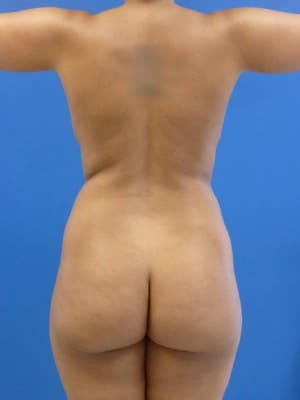
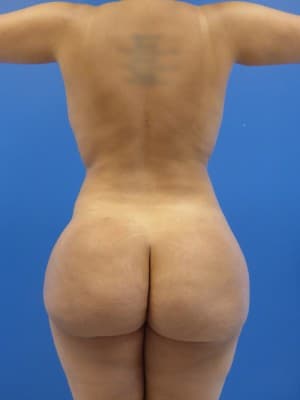
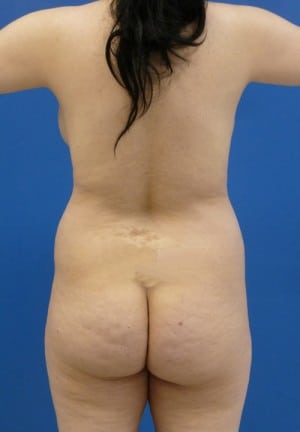
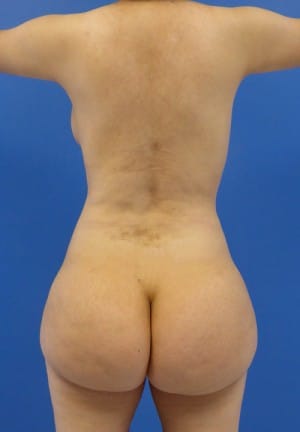
Every patient below had fat placed above the muscle under ultrasound guidance by Dr. Salama.
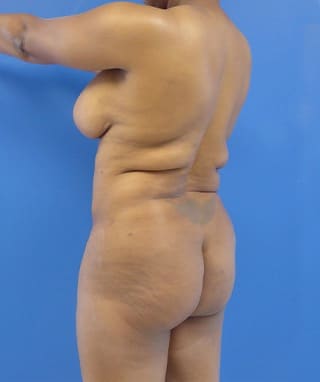
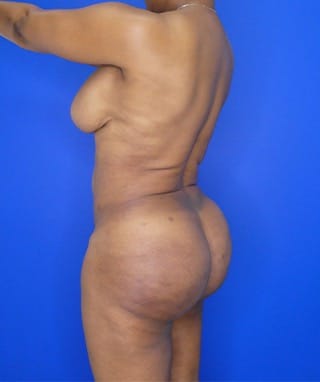
See all Brazilian butt lift cases →
Safety After Surgery: The Rules That Protect You
The rules of BBL recovery are safety rules as much as cosmetic ones. Walking from the first evening and keeping your legs moving lowers the risk of blood clots. The compression garment limits fluid collection. Not sitting on the grafts for six weeks protects the fat while it gains a blood supply. Lymphatic massage keeps the liposuctioned areas from hardening. And knowing the warning signs, fever, one area much more swollen and painful than the rest, calf pain, chest pain or shortness of breath, means problems are caught early, when they are easy to treat. The complete plan, week by week, is in the BBL recovery guide.
Why Patients Choose Dr. Salama for a BBL
Patient reviews: 4.9★ on Google, 748 reviews for Elite Plastic Surgery · 4.7★ on RealSelf, 2,561 reviews (RealSelf Verified) · counts as of October 2026.
- Certified by the American Board of Plastic Surgery and the American Board of Surgery; member of the American Society of Plastic Surgeons and The Aesthetic Society.
- Fat harvested with PAL and UAL and placed above the muscle under ultrasound guidance on every case, a practice decision made to provide the safest setting for this procedure.
- He performs every surgery himself, in the practice’s own state-certified facility in Hollywood, Florida, minutes from Miami, with board-certified anesthesia providers.
- Bilingual team: hablamos español.
Ask Dr. Salama Your Safety Questions Directly
Book a virtual consultation from home, or call or text (305) 933-4033. Hablamos español.
BBL Safety Frequently Asked Questions
Is a BBL safe?
A Brazilian butt lift is safe when it is performed the way the evidence now says it must be: fat placed only in the layer above the gluteal muscle, under ultrasound guidance, with a blunt cannula, in an accredited facility, by a board-certified plastic surgeon who limits how much is done in one day. Done that way, the complication profile is similar to other major body-contouring surgery. Done the old way, with fat injected into the muscle, it carried the highest death rate of any cosmetic procedure.
Why was the BBL considered dangerous?
Because of fat embolism. When fat was injected into or under the gluteal muscle, a cannula could tear one of the large gluteal veins, and fat could enter the vein and travel to the heart and lungs. A 2017 task force of the aesthetic surgery societies estimated roughly one death in 3,000 BBLs at the time. The cause was identified as intramuscular injection, and the fix was to keep the fat above the muscle.
What is a fat embolism in a BBL?
A fat embolism is fat that enters the bloodstream. In a BBL it happens when fat is injected into the gluteal muscle and gets into a torn vein; it travels to the lungs and blocks blood flow, which can be fatal within minutes. Fat placed in the subcutaneous layer above the muscle cannot reach those veins, which is why placement depth is the single most important safety factor.
What is an ultrasound-guided BBL?
A BBL in which the surgeon watches the cannula tip on a live ultrasound image while placing the fat, so there is no guessing about depth. The cannula shows as a bright line, the boundary between the fat layer and the muscle is clearly visible, and the fat is seen spreading in the layer above it. Dr. Salama performs every BBL under ultrasound guidance, a practice decision made to provide the safest setting for this procedure.
Does Dr. Salama use ultrasound guidance for every BBL?
Yes. Every Brazilian butt lift at Elite Plastic Surgery is performed with ultrasound-guided placement of the fat above the muscle, and the fat is harvested with power-assisted and ultrasound-assisted liposuction. This is a practice decision made to provide the safest setting for this procedure.
What do Florida’s BBL rules require?
Florida’s Board of Medicine rules for gluteal fat grafting require that fat be placed only in the subcutaneous layer, never into or under the muscle; that the surgeon use ultrasound guidance to confirm the cannula is in the subcutaneous space; and they limit the number of BBLs a surgeon may perform in a day. Office surgery facilities must be registered and inspected. Elite Plastic Surgery operates within these rules.
How many BBLs does Dr. Salama do per day?
Within the limit set by Florida’s Board of Medicine, and with the time each case needs. Dr. Salama performs each BBL himself from start to finish; the fat is not harvested or placed by an assistant.
What is the death rate for a BBL now?
Much lower than it was. A 2019 survey published in Aesthetic Surgery Journal, after the specialty adopted subcutaneous-only placement, estimated about one death in 15,000 BBLs, compared with roughly one in 3,000 estimated in 2017. Ultrasound guidance was adopted after that survey and is expected to lower the risk further. No surgery has zero risk, which is why the other safeguards on this page matter.
What are the other risks of a BBL?
The same risks as liposuction and fat transfer anywhere: infection, bleeding, fluid collection (seroma), contour irregularities, asymmetry, fat necrosis (firm lumps of fat that did not survive), loss of some transferred volume, numbness, blood clots (DVT) and anesthesia risks. Each has a safeguard: sterile technique and antibiotics, careful harvesting, drains or compression, planned placement, limits on volume per side, early walking and clot prevention, and board-certified anesthesia.
How much fat can be safely transferred in a BBL?
It depends on your anatomy, not a fixed number: the fat has to fit comfortably in the subcutaneous layer without being over-packed, because over-filled fat loses its blood supply and dies. Dr. Salama plans the volume per side at the consultation from your donor fat and the space available; his gallery lists the volume used for each patient so you can see what different amounts look like.
Who is not a safe candidate for a BBL?
Patients with a BMI above about 35, uncontrolled diabetes or blood pressure, a history of blood clots or clotting disorders, active smokers who will not stop, patients with too little fat to harvest safely (a skinny BBL has a lower limit), and anyone who cannot follow the six-week no-sitting rule. Dr. Salama reviews your health history and may ask for medical clearance before scheduling.
Is a BBL safer in a hospital or an office surgery center?
The accreditation and the team matter more than the building. Elite Plastic Surgery operates its own state-certified office surgical facility, inspected under Florida’s office surgery rules, with board-certified anesthesia providers and emergency equipment and protocols on site. Dr. Salama also holds hospital affiliations for patients whose health needs them.
How do I check a BBL surgeon’s credentials and record in Florida?
Look the surgeon up on the Florida Department of Health license verification site, which shows the license status and any public discipline; confirm certification by the American Board of Plastic Surgery on its website; and confirm the facility is registered with the state. Dr. Salama is certified by the American Board of Plastic Surgery and the American Board of Surgery, and his Florida license can be verified the same way.
Why do people go abroad or to cheap BBL clinics, and why is it risky?
Price. Low-cost clinics often keep prices down by having a surgeon perform many BBLs a day, by using unaccredited facilities or non-plastic-surgeons, and by skipping ultrasound guidance and medical clearance. Those are exactly the factors linked to BBL deaths. Travel also means no surgeon nearby if a complication develops after you return home.
What should I ask a surgeon before a BBL?
Are you certified by the American Board of Plastic Surgery? Do you place the fat only above the muscle, and do you use ultrasound guidance on every case? How many BBLs do you do in a day? Is your facility state-certified or accredited, and who gives the anesthesia? Who do I call at 2 a.m. if something is wrong? Can I see cases with my body type? Dr. Salama answers all of these at the consultation.
What safety steps happen on the day of surgery?
Identity and consent check, review of your medical clearance and labs, a pregnancy test where appropriate, compression devices on the legs to prevent clots, warming to keep your temperature normal, monitoring by a board-certified anesthesia provider throughout, ultrasound guidance during fat placement, and a recovery period with nursing staff before you go home with a caregiver.
Is a skinny BBL less safe than a regular BBL?
No; the safety rules are identical. A skinny BBL transfers a smaller volume, so the main difference is managing expectations about the result. See the skinny BBL page.
Sources
- Mofid MM et al. Report on mortality from gluteal fat grafting: recommendations from the ASERF Task Force. Aesthetic Surgery Journal, 2017.
- Mills D et al. Gluteal fat grafting: a survey of practice patterns and safety after the task force recommendations (mortality estimate ≈1:15,000). Aesthetic Surgery Journal, 2019.
- Florida Board of Medicine, standards of practice for gluteal fat grafting (Rule 64B8-9.009, F.A.C.), and the Florida Department of Health license verification.
- American Society of Plastic Surgeons, Buttock augmentation safety.

